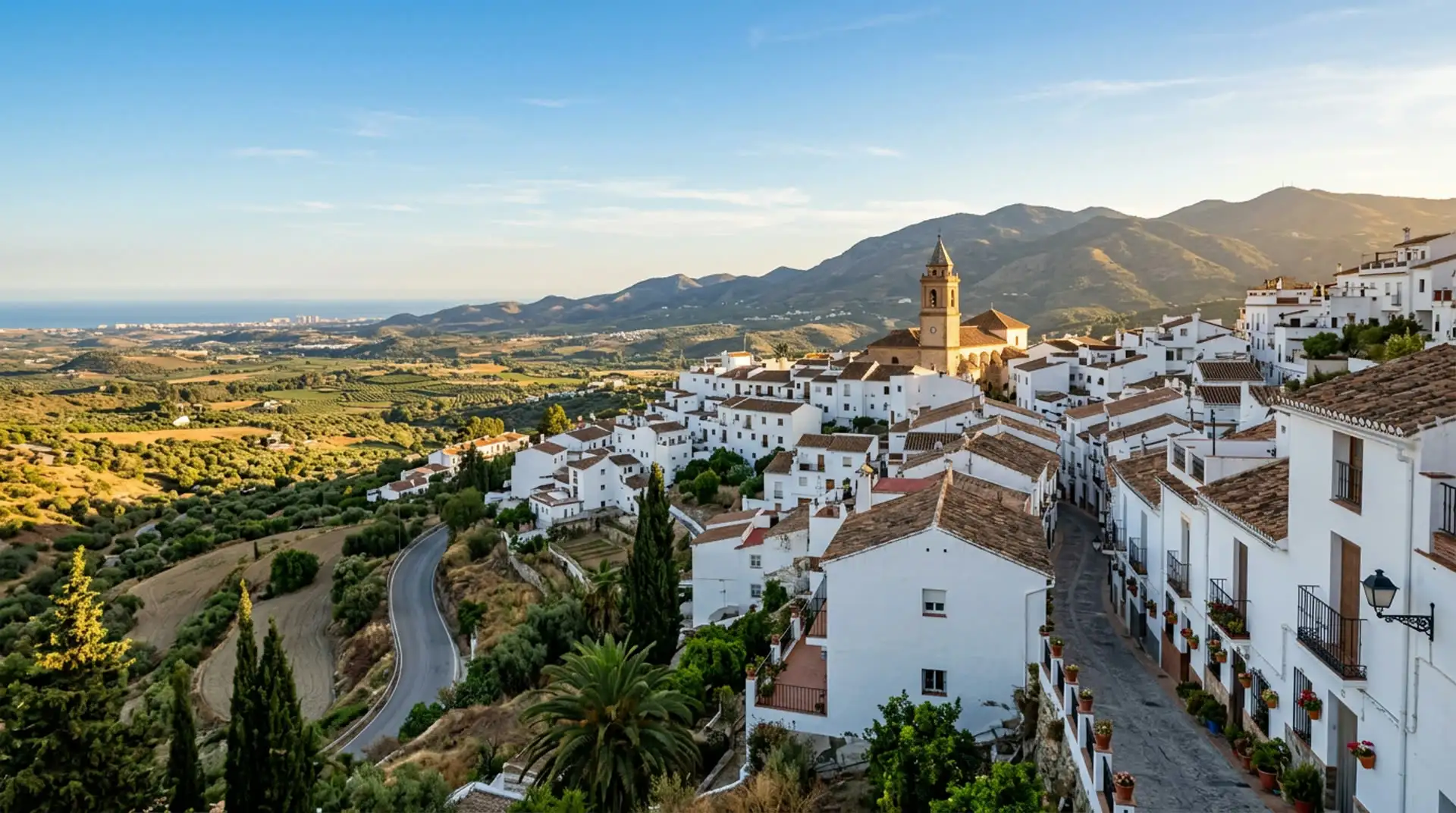
Find your dream home in Alhaurín de la Torre

AI-powered property search

Your perfect home in Alhaurín de la Torre is just a few clicks away. Fill in the property finder to get started.

45.066
Population
10%
Expat share
2.676 €
Avg €/m²
Updated 2026-08-30How we source our data

Living in Alhaurín de la Torre

Alhaurín de la Torre sits sixteen kilometres from Málaga city, between the airport and the Sierra de Mijas, at ninety-five metres above sea level. It borders Málaga, Cártama, Torremolinos, Mijas, Benalmádena and Alhaurín el Grande. The municipality runs right up to the airport land, and the town hall has an airport-city development plan on that boundary. City, airport and coast are all short drives. The catch is what is missing: there is no railway station, and the sea sits behind the sierra.

The town held 45,066 residents at the start of 2025, up from 38,523 ten years earlier, about a sixth larger in a decade. That makes it one of the province's growth towns, though well short of the fastest: at least ten municipalities grew quicker, Casares, Ojén, Benahavís, Mijas and Cártama among them. The growth is Spanish. Foreign nationals number 4,370, under one in ten residents, and the British, the largest single group, are only about one in seven of those. Daily life runs in Spanish, and a foreign buyer here is in a small minority.

Asking prices rose by more than a tenth in the year to July 2026. The town is dearer per square metre than Alhaurín el Grande next door and cheaper than the coast. Centro is the dearest district, Pinos de Alhaurín the cheapest, and Manantiales - Lagar - Cortijo has climbed by close to a third in a year.

The verdict

Honestly considered, both sides.

The upside is real. So is the downside. Both matter more than any brochure will admit.

The case for

  • City, airport and coast within short drives

    The town sits sixteen kilometres from Málaga, against the Sierra de Mijas, with the municipality running right up to the airport land. Few inland towns are placed this well for all three.

  • Sports facilities beyond what towns this size usually have

    A municipal hall whose main court divides into three, seating for more than nine hundred, a nine-metre climbing wall, an aquatic centre, a padel complex with more than ten courts and a sports city on a sixty-eight thousand square metre plot.

  • A growing town where foreign residents stay scarce

    The population grew by about a sixth in a decade and foreign residents remain under one in ten, so the growth is being driven by Spanish households rather than by foreign fashion.

  • Lauro Golf inside the municipality

    Twenty-seven holes, par seventy-two, on the A-404. Note that Alhaurín Golf, despite the name, is in Alhaurín el Grande next door, not here.

  • Cheaper districts still exist on the edges

    Pinos de Alhaurín is the cheapest district and has risen only modestly. Centro is the dearest, and Manantiales - Lagar - Cortijo has climbed by close to a third in a year.

The case against

  • A commuter town without a railway station

    The Cercanías serves Cártama, Aljaima, Pizarra and Álora inland, and the coast west of Málaga, but neither Alhaurín has a station. You rely on bus lines into the Málaga metro at Puerta Blanca and Barbarela.

  • Not a beach town, whatever the map suggests

    The sea is close on paper, but the Sierra de Mijas stands in the way. Reaching the coast means driving round or over it, every single time.

  • Málaga's prison sits inside the municipality

    It is a fact of the place, and better you hear it here than discover it after you have bought. Check where it sits relative to anything you view.

  • Daily life runs in Spanish, not English

    Foreign nationals are under one in ten residents, and the British are only about one in seven of those. A buyer who wants an English-speaking bubble will be unhappy here.

  • Growth means building sites and more traffic

    The town has grown by about a sixth in ten years, and the town hall has an airport-city development plan on the boundary. Expect cranes, roadworks and change for years.

Editor's note

Where you might be better off elsewhere

We would send one kind of buyer to Alhaurín de la Torre: someone who wants a working Spanish town with the city, the airport and the coast a short drive away, and who speaks Spanish or intends to learn it. We would not send you here if you want to walk to a beach, if you refuse to drive, or if you want English spoken around you; foreign residents are a small minority and the town does not cater to them. If you need a train, buy in Cártama instead, which has a Cercanías station and the valley's hospital. If you want the sea at the end of the street, look at Torremolinos or Benalmádena on the far side of the sierra. If you want more foreign neighbours at a lower price per square metre, Alhaurín el Grande next door is smaller and far more international. Coín, further up the valley, grew faster over the past decade and suits buyers happy to be deeper inland. We like this town for what it is. Buy it for that, or buy elsewhere.

Lifestyle data

Property market

2.676 €
/m²
+10.9% YoY

Updated 2026-08-30

Access

MÁLAGA AIRPORT
Málaga-Costa del Sol · AGP
276+ direct routes
Top direct
LondonManchesterDublinAmsterdamBrusselsCopenhagen

Community

10%
expat share
Spanish97%
English22%
Arabic4%

Amenities

0
Int. schools
0
Hospitals

Alhaurín de la Torre neighborhoods

Where to live and what to expect at each price point.

Streets and low buildings of the old centre of Alhaurin de la Torre around the town hall

Centro

250.000 - 560.000 €Indicative guide prices

The old core, where the town hall, the market and the weekly business of the place still sit. Dearest district in the municipality, and the only part where a household can live mostly on foot.

CentralWalkableHistoric
Recent housing and open streets in the Manantiales district on the northern edge of Alhaurin de la Torre

Manantiales - Lagar - Cortijo

250.000 - 550.000 €Indicative guide prices

Newer housing on the northern side, and by a wide margin the fastest rising district in the town over the past year. That is a signal about where local demand is going, and also a reason to check what is still to be built.

New-buildRisingFamily
Established residential streets of houses and low blocks in the Capellania district of Alhaurin de la Torre

Capellanía - Retamar

240.000 - 530.000 €Indicative guide prices

Established residential streets between the centre and the sierra, houses and low blocks on a settled grid. Prices have moved steadily rather than sharply, which suits buyers who want the town rather than a trade.

ResidentialSteadyFamily
Quiet residential streets on the eastern edge of Alhaurin de la Torre towards Churriana

El Romeral - Peñón de Zapata

230.000 - 500.000 €Indicative guide prices

The eastern edge towards Málaga and Churriana, quieter and cheaper than the centre. Among the slowest risers in the town, which for a patient buyer is the more interesting half of that sentence.

ValueEdgeQuiet
Detached houses and plots on the hillside at Pinos de Alhaurin above Alhaurin de la Torre

Pinos de Alhaurín

220.000 - 500.000 €Indicative guide prices

The hillside settlement above the town, detached houses and plots on the slopes of the Sierra de Mijas with its own bus service down. Cheapest part of the municipality, and it has risen only modestly.

ValueHillsideDetached

Alhaurín de la Torre on the map

Alhaurín de la Torre FAQ

Honest answers to the questions buyers actually ask.

What is the difference between Alhaurín de la Torre and Alhaurín el Grande?+
They are separate municipalities that share a name and a border, and buyers mix them up constantly. Alhaurín el Grande is smaller and far more foreign in its population mix; Alhaurín de la Torre is larger, closer to Málaga and the airport, and dearer per square metre. The names confuse the golf courses too: Lauro Golf is in Alhaurín de la Torre, while Alhaurín Golf, despite the name, is in Alhaurín el Grande. Check which municipality a listing actually sits in before you view it.
Can I live in Alhaurín de la Torre without a car?+
It is hard. There is no railway station in either Alhaurín. What exists is a bus-to-metro service: two lines run into the Málaga metro at Puerta Blanca and at Barbarela, and one of those also connects with the Cercanías at the airport. A third line runs to Málaga and to Pinos de Alhaurín. That covers a city commute, but the districts spread out, and for the coast, the golf and the big shops you will want a car.
How do I get to the beach from Alhaurín de la Torre?+
By car. The town borders Torremolinos and Benalmádena, but the Sierra de Mijas stands between it and the sea, so you drive round or over the hills rather than walk anywhere. The main roads, the A-404 and the A-7052, both run towards Churriana on the airport side. The drive is short, but it is a drive, every time. If you picture stepping out of your door onto sand, this is the wrong town; treat the beach as an outing.
Which district of Alhaurín de la Torre should I look at?+
Centro is the dearest. Manantiales - Lagar - Cortijo is second dearest and far and away the fastest rising, up by close to a third over the year to July 2026. Capellanía - Retamar and El Romeral - Peñón de Zapata sit between them. Pinos de Alhaurín is the cheapest and has risen only modestly. If you want value that has not yet moved, look at Pinos de Alhaurín; if you want to be in the centre of things, expect to pay for it.
What healthcare is available in Alhaurín de la Torre?+
There is a public health centre in the town, which belongs to the Guadalhorce valley health district. There is no hospital in the town itself: the valley's hospital is in Cártama, and the reference hospital is the Virgen de la Victoria in Málaga. For routine care you stay local; for anything serious you travel. With the city sixteen kilometres away that is workable, but buyers who want a hospital close by should weigh Cártama or Málaga instead.
Will I find an English-speaking community in Alhaurín de la Torre?+
A small one. Foreign nationals number 4,370, under one in ten residents, and the British, the largest single group among them, are only about one in seven of the foreigners. This is a Spanish town where a foreign buyer is in a small minority, and daily life, from the town hall to the sports hall, runs in Spanish. Some buyers want exactly that. If you want an established English-speaking bubble, you will not find it here.
Are property prices in Alhaurín de la Torre still rising?+
Asking prices rose by more than a tenth in the year to July 2026, with Manantiales - Lagar - Cortijo up by close to a third and Pinos de Alhaurín up only modestly. The town remains dearer per square metre than Alhaurín el Grande next door and cheaper than the coast. Nobody can promise you that continues. What the record shows is steady local demand: the town added about a sixth to its population over the past decade.
What are the costs of buying property in Alhaurín de la Torre?+
When buying property in Alhaurín de la Torre, budget for property transfer tax (ITP) of 7%, plus roughly 3-4% in notary, land registry and legal fees. Agency commission is usually paid by the seller. On the mainland and the Balearics, new builds pay VAT (IVA) of 10% plus AJD stamp duty instead of ITP. Transfer tax is set by Andalucía rather than nationally, and reduced rates can apply for main homes and younger buyers.
What are the ongoing costs of owning property in Alhaurín de la Torre?+
Annual property ownership costs in Alhaurín de la Torre include IBI (property tax) of 0.4-1.1% of cadastral value, community fees (for apartments), rubbish collection tax (basura), utility bills, and property insurance. Budget approximately 2-4% of property value per year for all running costs. IBI is set by the town hall of Alhaurín de la Torre within a national band, so it is municipal rather than regional.
What taxes do I pay when selling property in Alhaurín de la Torre?+
When selling property in Alhaurín de la Torre, you pay capital gains tax (plusvalía) on the profit at rates of 19-26% depending on the gain amount. Non-residents have 3% of the sale price withheld at completion. You may also pay municipal capital gains tax. Main residence exemptions may apply for residents over 65. Capital gains tax is national, so it is the same in Andalucía as anywhere in Spain. Plusvalia municipal is set by the town hall of Alhaurín de la Torre and has had two calculation methods since the 2021 reform, so ask your lawyer which one is cheaper for you.
Can I still get a Golden Visa by buying property in Spain?+
No. Spain withdrew the Golden Visa property investment route in April 2025, so buying in Alhaurín de la Torre no longer leads to residency. Non-EU buyers who want to live in Spain apply for a separate permit instead, most often the non-lucrative visa (proof of income and private health insurance) or the digital nomad visa (remote work for non-Spanish clients). Ask an immigration lawyer which route fits your situation before you buy.

Transfer tax rates as of August 2026. Rates are set per autonomous community and do change. Confirm the current figures with a Spanish lawyer or tax adviser before you budget.

Why people choose

es.casa

Local Experts

Deep knowledge of Alhaurín de la Torre and its real estate market.

Personalized Service

We accompany you throughout the entire process, from search to closing.

Exclusive Portfolio

Access to the best properties before they reach the market.

Spain's first AI-Powered platform

Our AI technology matches you with perfect properties faster than traditional search.

Foreign buyer's guide

New to buying property in Spain?

Our step-by-step guide covers everything foreign buyers need to know, NIE numbers, Golden Visa, mortgages and the legal process.

Mortgage calculator

Calculate your Spanish mortgage

Estimate monthly payments, compare loan scenarios and understand the true cost of buying in Spain.